
Oktoberfest Oslo 2026: the site, the deliveries and the crew on Youngstorget
Three weekends at Youngstorget, close to Oslo's Government Quarter. The production planned its build, deliveries and suppliers in HR Cluster, and brought its crew in through the same system.
The event
Oktoberfest Oslo is held at Youngstorget in central Oslo. The 2026 edition ran over three weekends: 8–10, 15–17 and 22–24 October.
The site is built on a city square with neighbours, traffic and public transport on every side, and taken down again after the third weekend. The crew for those weekends is recruited in the weeks before.
Published 29 October 2026. Describes HR Cluster as it was used for the 2026 edition.
Deliveries and returns count the production's records for the 2026 project, cancelled ones excluded: 95 deliveries and 56 returns. Activities count the plan's own entries, without shift and meal rows. Shifts planned is the planned headcount on published shifts from the build to the take-down; 1,103 of them were filled. Crew clocked in counts the different people who clocked in on the project.
About this case study: HR Cluster was developed alongside live productions. Its founder is part of the production management team for Oktoberfest Oslo.
The challenge
On a city square, nothing should arrive unannounced. Every truck needs a time, a place to unload and someone waiting for it. Suppliers reschedule, drivers change, and a delivery that slips by a day moves the work planned around it.
Youngstorget adds another layer. The production takes place close to the Government Quarter, where security considerations place additional demands on logistics and coordination. Those requirements, and any authorisations that follow from them, are set and granted outside HR Cluster.
At the same time, a crew of nearly 300 has to be recruited, registered and scheduled in a few weeks.
How HR Cluster was used
One plan for the build, the weekends and the take-down
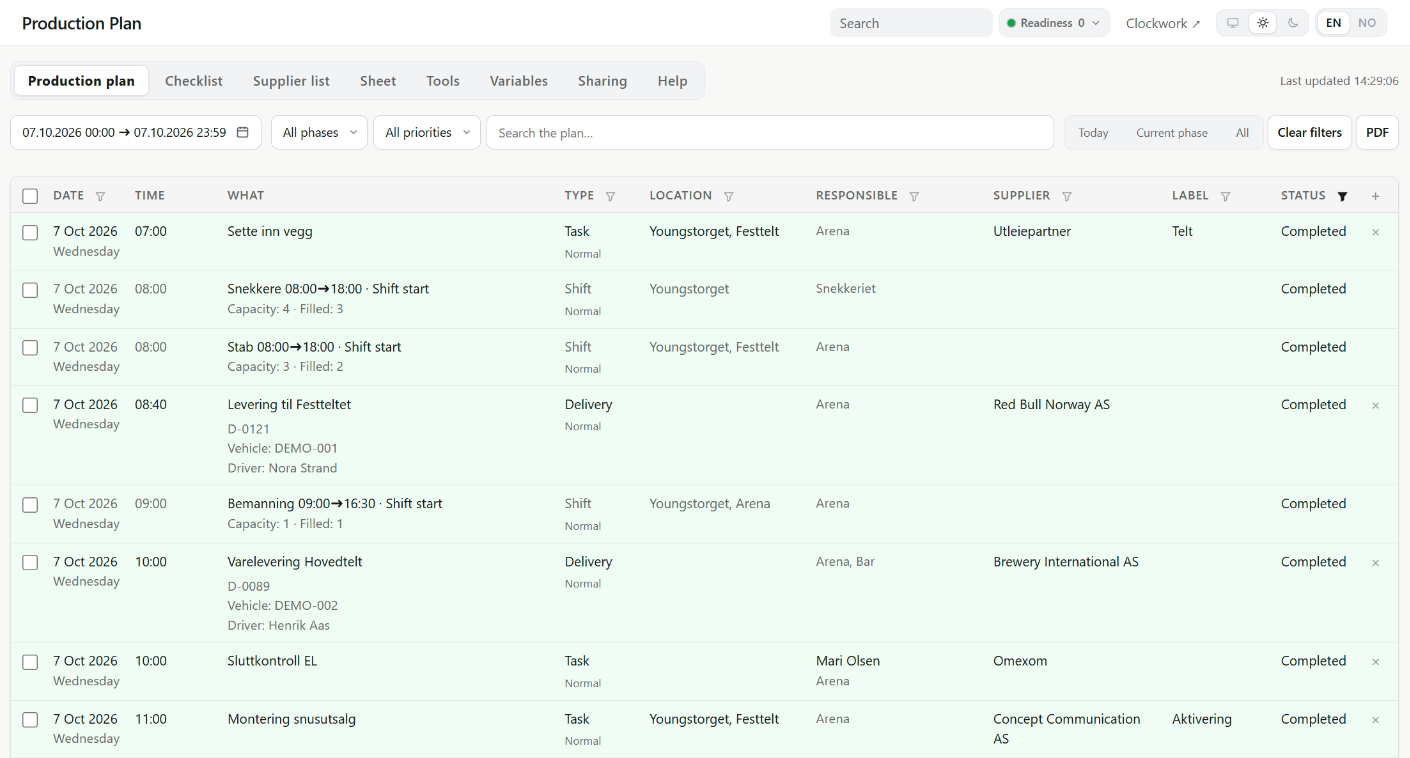
The production worked from the production plan from August. Every activity in the build, the weekends and the take-down carried a date, a phase, a location, a department and a responsible person.
Shifts from the schedule appear in the plan as locked rows, so the crew booked for a task sits next to the task. Activities and deliveries name their supplier.
Meals were planned from the published shifts, so the caterer received headcounts, not names. On site, Plan Live showed the plan on a screen, read-only.
- Activity in the plan
- Delivery with a time window
- Driver and vehicle on record
- Completed together
Deliveries, drivers and vehicles in the plan
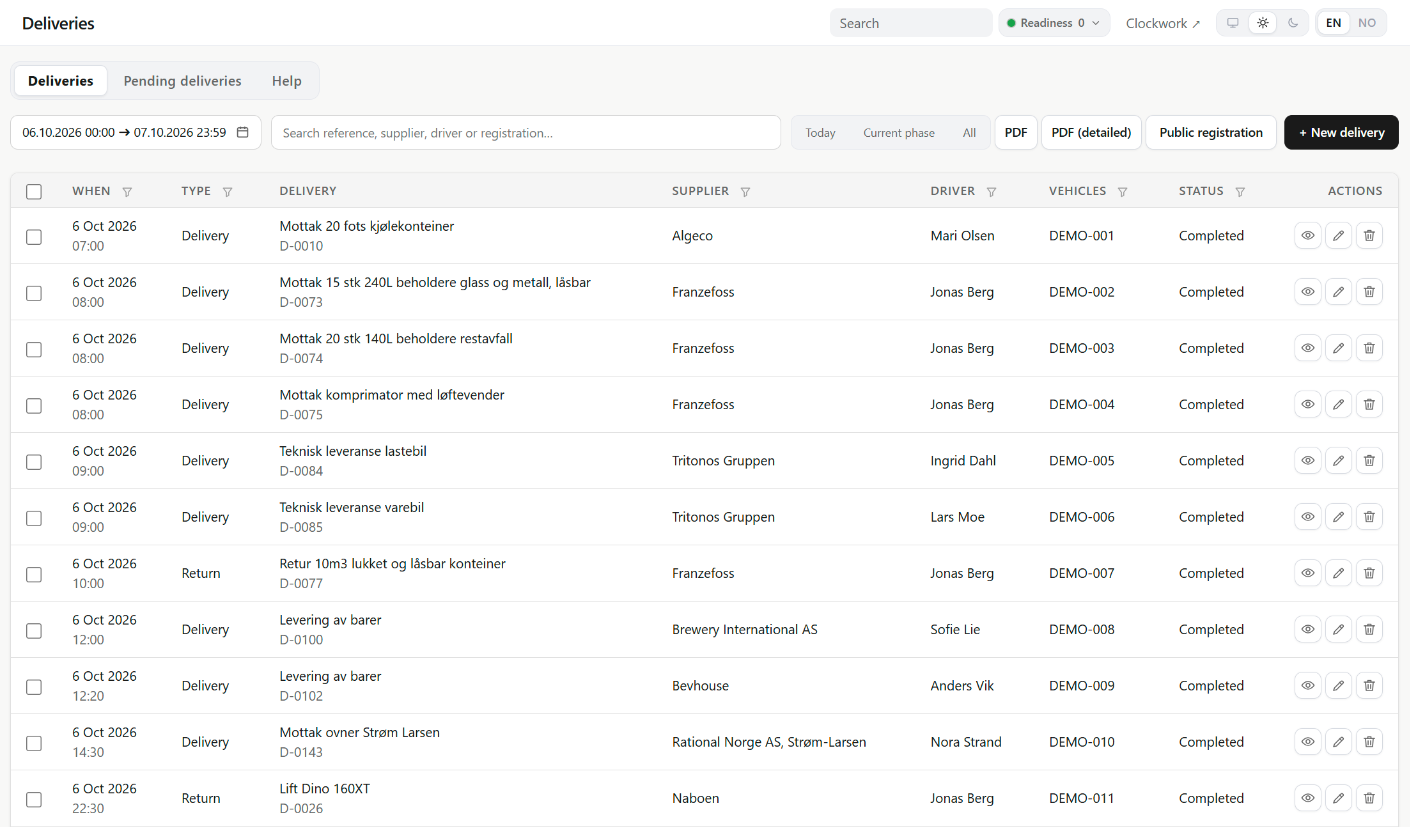
Each delivery got its own reference number, D-0001 upwards, with a time window, a driver and a vehicle recorded on it, and was linked to the activities it served. When an arrival moves, the plan moves with it. When a delivery is completed, its activities in the plan are completed too. Of the 95 deliveries, 70 arrived during the build; 44 of the 56 returns went out during the take-down.
Suppliers proposed deliveries and changes from their own supplier page, and pending deliveries were approved from a phone during the build. Only someone with access to both deliveries and the plan can approve one, because a delivery changes the plan.
This is the production's own coordination and recordkeeping. HR Cluster does not enforce the security requirements around the Government Quarter. Any authorisation they call for is granted outside the platform.
Bringing the crew in
Crew came in through public sign-up links: 195 of the 296 crew on the schedule joined this way. Each crew group had its own registration form, so bar crew aged 20 and over, crew aged 18 to 19 and other groups each answered the questions and got the terms that applied to them.
Crew picked the shifts they wanted on the link, then registered. Some registrations were accepted directly; others were reviewed by the production first. New crew received a welcome email with a link to set their password. Nearly half of all shift assignments came from crew picking shifts on a link.
- Sign-up link
- The group's registration form
- Accepted directly or reviewed
- Welcome email
As the event came closer, the same records carried the contracts: 296 were generated in HR Cluster and sent for signing, and 251 have been signed by both sides.
Of the 296 crew on the schedule, 277 clocked in, and only five people clocked in without a planned shift. Crew clocked in by scanning a personal QR code on arrival, or were clocked in by a manager. Management used the PIN terminal.
What the production gained
On the event days, 944 of the 1,005 planned positions were filled: 93% on the first weekend and 96% on the last. In the plan, 865 of the 891 activities were marked completed.
Because the schedule, the clock-ins, the deliveries and the plan sat in one record, the production could set who was scheduled against who turned up, and move a delivery without losing the work planned around it.
We have not measured time saved, and we don't publish an estimate.
In more detail
Ops: the production side
Deliveries, suppliers, accreditation, vehicles and safety in one workspace.
Production plan and Plan Live
One plan for tasks, deliveries and suppliers, and a live screen for the teams who need it.
Case study: Sommerbris 2026
A festival workforce in full swing: more than 1,000 crew clocked in and 1,328 shifts planned.