
Control behind the scenes. Same system as the crew.
The production plan, deliveries, suppliers, accreditation, vehicles and risk. Everything that happens behind the scenes, in the same workspace your crew already uses. One platform, not a second system.
Plan. Coordinate. Control. Run live.
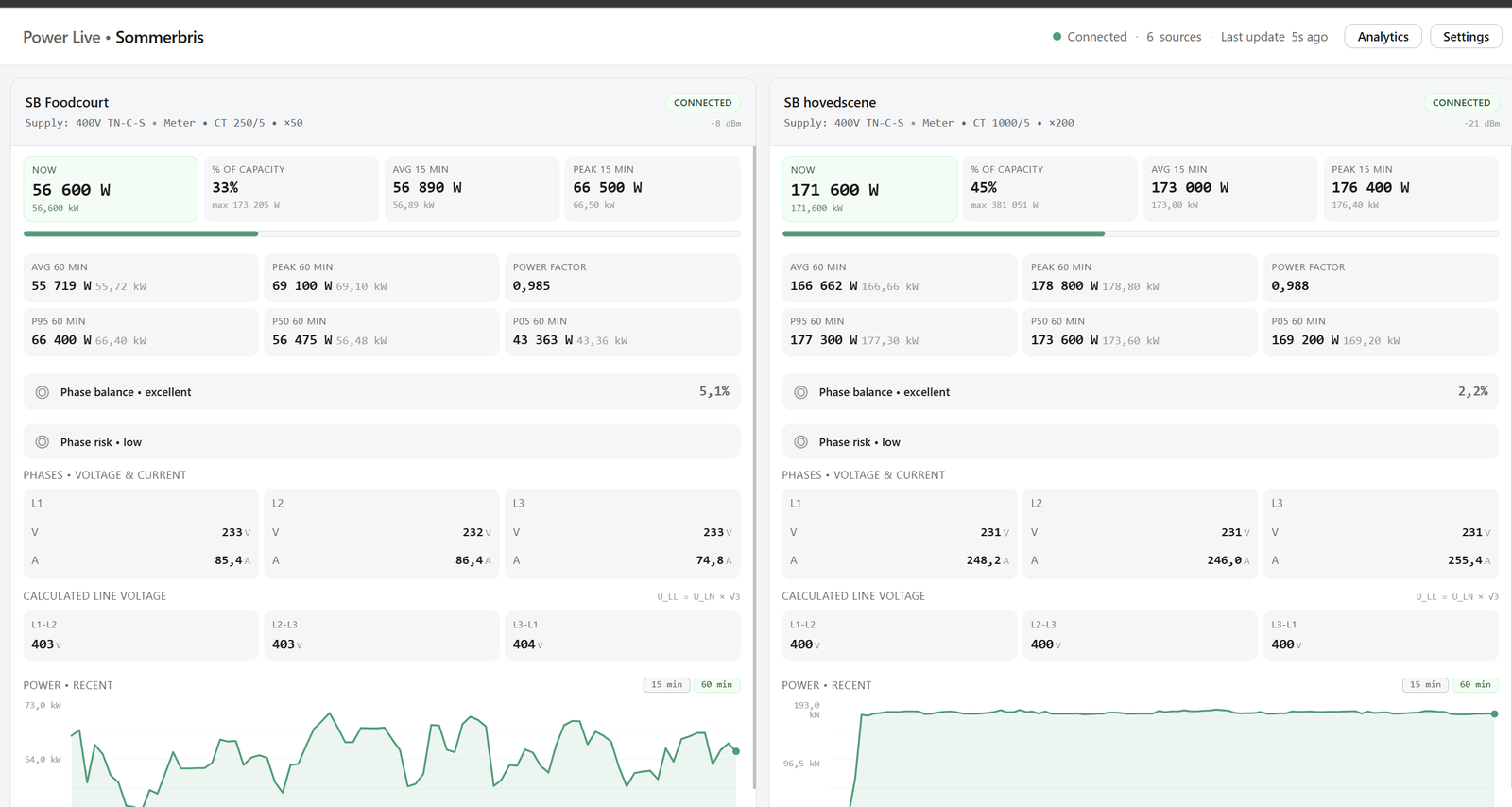
Plan the production, coordinate suppliers and deliveries, control who and what gets through the gate, and run the day from the same plan. The areas that usually live in spreadsheets, in the same workspace as the crew. Every one of them started as a problem in a real production before it became a module.
Production plan
Every task and delivery on one dated plan: time, owner, department, supplier and status, edited in place while the production runs. Departments get a morning briefing. Plan Live puts the plan on a screen for the teams who need it, live and read-only, without workspace access.
Explore Production PlanDeliveries
One delivery movement, one operational record, with a reference the gate can read out over the radio. Suppliers and hauliers register their own through a public link. Nothing lands on the plan until you approve it.
Suppliers
A register with Brønnøysund details, documents that expire and a responsible on your side. One link per supplier for their passes, vehicles and deliveries. Everything they send is a proposal, reviewed field by field.
Accreditation
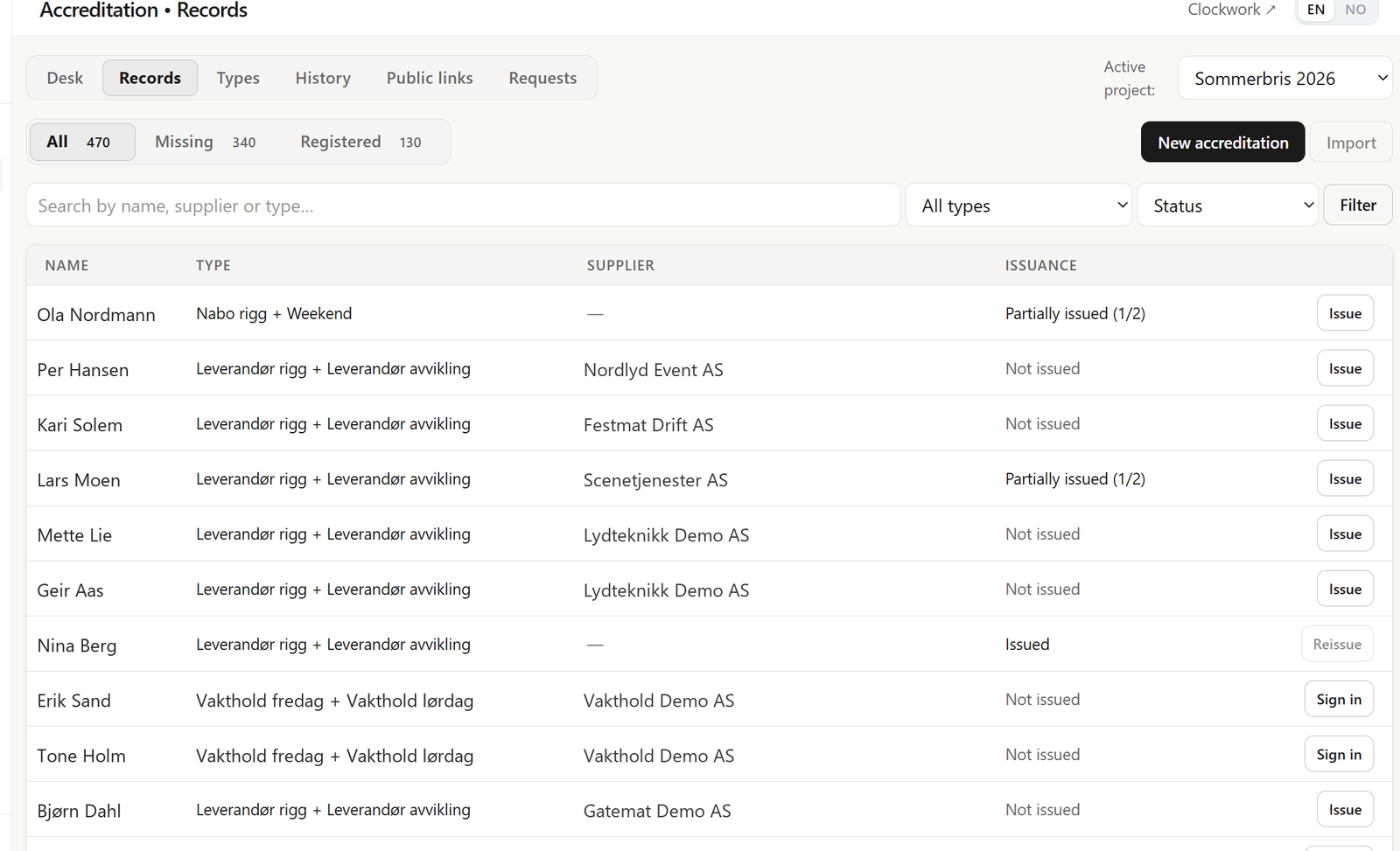
Who is allowed on site and who is here now. Passes issued or presence tracked per type, valid by project phase, checked at a desk that doubles as the evacuation list.
Vehicles
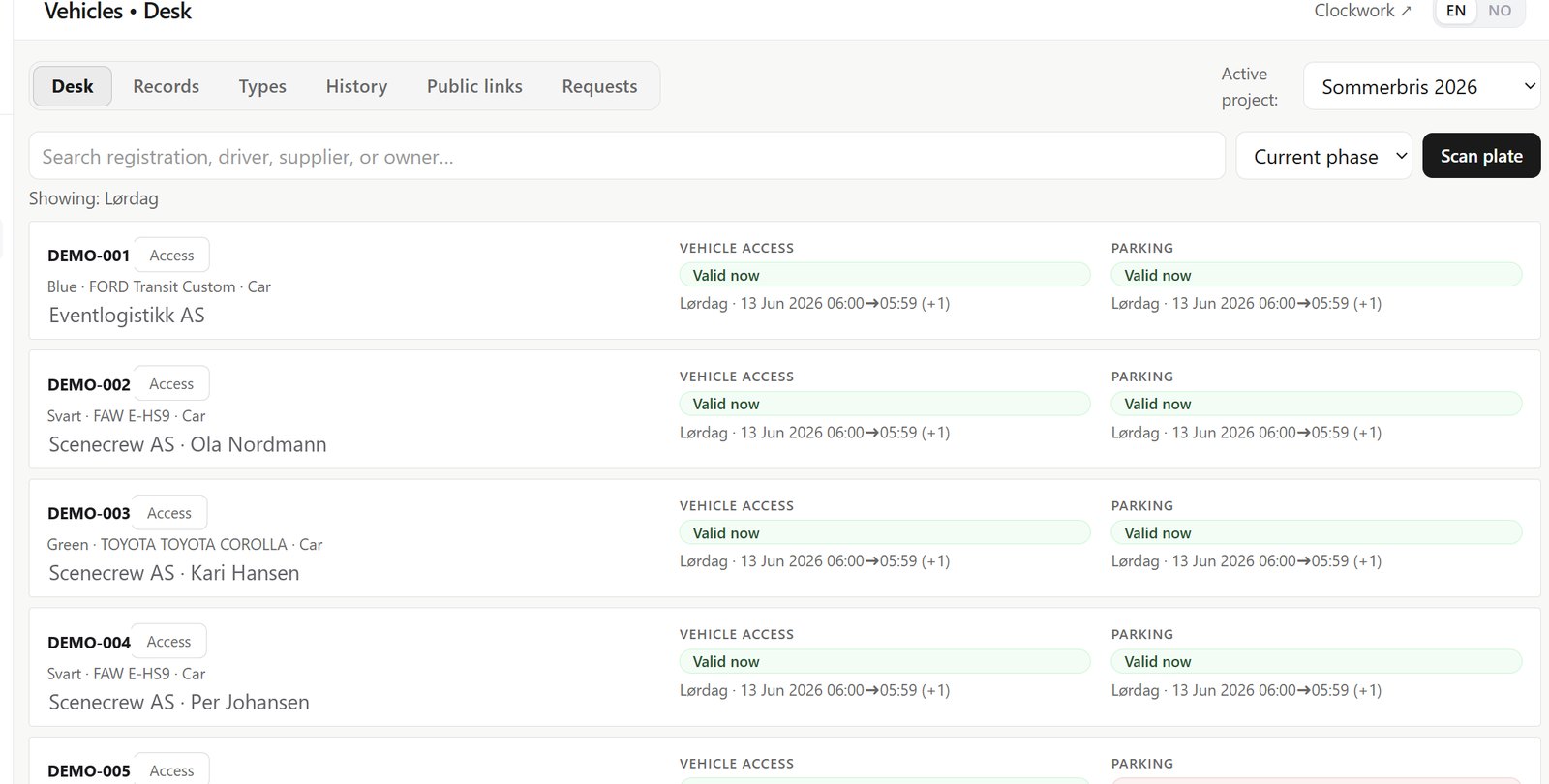
Request, review, permit, gate. Access and parking are two decisions, per phase and per zone. At the gate, a scan or a plate gives one answer: approved, access only, denied.
Departments
Production, Bar, Rigging, Security. A person can sit in several. Departments split the plan, scope who can be made responsible, and receive their own briefing.
Risk and incidents
Risk assessments reviewed and approved before the work starts, with participants confirming they were briefed. Incidents reported from the field on the same site structure, each with an owner and a follow-up state.
Modules are switched on per workspace. Talk to us to see which ones your production needs first.
Used together with Workforce
Production sees staffing. Staffing sees access. Ops runs in the same workspace as Workforce, so everyone works in one system rather than in parallel tools.
One list of people
Crew, suppliers and access all reference the same event structure, instead of being re-keyed in three places.
One structure for areas and zones
A zone referenced by security is the same zone referenced by scheduling. Not two versions to keep in sync.
One answer when something happens
When the auditor or the venue asks, there's one answer. Not four spreadsheets with slightly different numbers.
Talk through your Ops setup.
If you run production or operations at festivals, venues or large events, we'd like to hear how you currently stitch it together. Whether Ops is your starting point or an expansion, we'll show you where to begin.